Zero to One for MSMEs - Your Second Market Is a New Startup
An MSME's first market outside home is a zero-to-one problem, so copying the home-market model across several states at once usually burns cash. Founders who win one beachhead, prove it with hard numbers and then replicate a tested playbook build regional and national distribution that lasts.
In March 2023, Senthil Kumar signed fourteen distributors in one week. He was at a food-products trade fair in Chennai, his stall was busy, and distributors from Karnataka, Kerala, Andhra Pradesh and Telangana kept walking up asking for terms. He gave every one of them sixty days' credit and a launch scheme. On the train back to Erode, he told his wife that Selvi Foods had finally become a South Indian company. His MSME expansion strategy, as far as he had one, was done.
Eighteen months later, nine of those distributors had stopped ordering. ₹1.6 crore was stuck in overdue receivables. Cartons of batter mix were coming back close to expiry. Sales in his home district, which he had not watched for a year, had slipped.
Senthil is fictional. His story is not. It is the most common way I see an MSME expansion strategy fail, and the reason is a misunderstanding about what kind of problem expansion is. Founders treat the first market outside home as a copy of the home market. It isn't. Your second market is a new startup, and it needs to be built like one.
Why your first new market is a zero-to-one problem
In Zero to One (2014), Peter Thiel separates two kinds of progress. Going from zero to one means making something new. Going from one to n means copying something that already works and spreading it. Most founders file geographic expansion under one to n. The product works, the factory works, the customers at home are happy, so selling in a new state should be a matter of repeating the same steps somewhere else.
That assumption is where the trouble starts. A business that has grown inside a 150-kilometre circle for twenty years has a winning formula, but much of that formula is invisible to the founder. Some of it sits in the product. A lot of it sits in things that do not travel.
Here is Selvi Foods before the trade fair. Senthil's father started it in 1994, grinding masala for wholesalers in the Erode market. Senthil added sambar and rasam powders under the Selvi brand, then instant idli and dosa mixes. By 2023, the company was doing ₹22 crore in revenue, and roughly three-quarters of it came from within 150 kilometres of the factory.
Why did it win at home? If you had asked Senthil, he would have said "quality." When he later asked twenty retailers and ten wholesalers, the answers were more specific. Stock was always fresh because the factory was two hours away and replenished every week. Wholesalers had known his father for decades and trusted the family enough to give and take credit on a phone call. The sambar powder tasted the way local households expected. And the price was a few rupees below the national brands.
Only some of that can be packed into a truck and sent to Bengaluru or Kochi. The trust, the credit on a phone call, the taste fit and even the freshness all belonged to the home market. That is what makes the first new market a zero-to-one problem. You are building a business from scratch in a place where nobody knows your name, carrying only the parts of your advantage that survive the journey.
Regional expansion for MSMEs fails when you copy-paste the home market
Look at what Senthil actually did. He copied his home-market model onto four states at once, and each copied piece broke in a predictable way.
He measured the wrong sales. The first year looked wonderful. Revenue rose to ₹27 crore, because every new distributor took a full opening stock. But that was primary sales, goods sold to distributors. What matters is secondary sales, goods the distributor sells on to shops, and Senthil had no way of seeing them. The stock had not reached kitchens. It had moved from his godown to fourteen other godowns.
His distributors were not making money. A distributor's return comes from margin multiplied by how often his money turns. Senthil gave a 5% margin on stock that sat for sixty days, plus thirty days of credit to retailers. The distributor's money turned about four times a year, which earned him roughly 20% on the capital he had put into Selvi. The fast-moving national brands in the same godown paid him better. So Selvi cartons went to the back, and the distributor's salesmen stopped mentioning the brand.
The product was built for one palate. Erode's sambar powder is not what many Kerala or Karnataka households expect. The difference was small, but small is enough when nobody knows the brand.
Trust had to be rebuilt by hand. At home, the trust was already there. In Vijayawada, nobody had heard of his father. Every collection call needed Senthil personally, and he was one man trying to cover four states.
Nobody owned the new markets. His best sales manager spent a year on trains, which is why the home market slipped.
None of these failures came from a bad product. Each one came from assuming that what worked in Erode would work everywhere.
The Zero-to-One Expansion Framework: Codify, Choose, Configure, Prove, Replicate
When Senthil came back to the problem in late 2024, he rebuilt his MSME expansion strategy from scratch. The approach he followed has five steps. The first four are zero-to-one work. Only the fifth is one to n.
Step 1: Codify why you win at home
Before you choose a market, write down why customers buy from you, in their words, not yours. Then sort each reason into two lists: the ones that travel and the ones that don't.
Senthil's interviews changed his whole view of the business. He had assumed his edge was the brand. It was actually freshness, which came from weekly replenishment, and that only works within reach of his trucks. His instant mixes stayed fresher on the shelf than competitors' stock, which often sat for months in a distant warehouse. That was an advantage he could carry, but only as far as his supply chain could stretch.
That one insight set the boundaries of his expansion. Any market he could not restock every week was a market where he would compete without his main advantage.
Step 2: Choose one beachhead, not a map
Geoffrey Moore's Crossing the Chasm (1991) borrowed the D-Day landings to describe how a new technology should enter a market: take one beach, hold it, and use it as the base for everything after. The idea fits regional expansion even better than it fits technology. A beachhead is a market small enough that you can dominate it with the resources you actually have.
Senthil ran three filters across his options:
- Customer similarity. Do the households cook the way your products assume?
- Replenishment reach. Can you restock every week at freight costs the price can absorb?
- Distributor availability. Is there a credible distributor with spare capacity and no directly competing brand?
Kerala failed the first filter. Chennai passed the first two but was crowded with strong local masala brands. The winner was narrower than any state: six neighbourhoods in south and east Bengaluru with large Tamil-speaking populations, plus the Hosur industrial belt on the way. That was about 1,200 kirana stores, an overnight truck ride from the factory, and full of working households who paid more for instant mixes.
It was not glamorous. It was winnable.
Step 3: Configure a distributor network that pays the distributor
This is the step most founders skip. Your distributor network is not a list of names. It is a set of businesses that each decide every morning which brands to push, and they push the ones that earn them money.
Senthil appointed one distributor for the whole cluster instead of three. He raised the margin to 8%, cut the stock norm to twenty-one days with weekly replenishment, and tightened market credit to fourteen days. Because freshness was the promise, he agreed to take back near-expiry stock himself. On rough arithmetic, the distributor's money now turned about ten times a year instead of four, and his return on the Selvi line went from around 20% to around 80%. Selvi moved from the back of the godown to the front.
He launched with eight products, not forty, because every extra product slows the distributor's turns. He adjusted one sambar powder slightly for the local palate. He hired one sales officer who rode with the distributor's salesmen on their routes for the first ninety days, so that someone from Selvi heard directly what the shopkeepers were saying.
Step 4: Prove the beachhead before you move
The trade fair had taught Senthil that sales numbers can look good while the business underneath is failing. So this time he set five tests the beachhead had to pass before he would open a second market:
- Repeat orders from shops. At least six in ten stores billed in a month had to reorder within forty-five days.
- Distributor return. The distributor had to earn his target return for three months in a row without extra schemes.
- Cost to serve. Freight, the sales officer's salary and trade schemes together had to stay within a fixed share of net sales in the cluster.
- Clean collections. No dues past the agreed credit days.
- No founder in the loop. The market had to run for sixty days without Senthil visiting or making collection calls.
It took nine months to pass all five. By then the cluster was running at around ₹2 crore a year, far less than the paper sales of 2023. This time, though, the stock had reached kitchens, the shops were reordering and the money had been collected.
Step 5: Replicate, and only now go from one to n
Once the beachhead had passed its tests, Senthil had something he did not have in 2023: a playbook. He had a checklist for appointing distributors, a template for sales routes, rules on which products to launch with, a credit policy, a scheme calendar and the five tests. He hired an area sales manager who had done this before at a large FMCG company. He also put in a distributor management system so that secondary sales were visible every week, not guessed at every quarter.
The five tests became the key results in a monthly review. That rhythm, more than any spreadsheet, is what turns expansion into a system. It is also the kind of strategy-to-execution work we focus on at Simpleworks Consulting.
Then he opened Mysuru and the western suburbs of Chennai at the same time. Each took about five months to pass the five tests, against nine for the first. That is what one to n looks like. You copy a model that has been tested once, not the home market, which never was.
National distribution, if Selvi gets there, will grow out of the same logic. When the clusters stretch beyond weekly reach of Erode, the next step is a regional stocking point, a carrying-and-forwarding agent or a second plant, which starts a new ring of beachheads. A national footprint is a chain of rings like this.
Distribution strategy in India: the brands that went deep before wide
Senthil's path is ordinary. It is also how many of India's best-known consumer brands were built.
Karsanbhai Patel started Nirma in 1969, making detergent in his backyard and cycling through Ahmedabad's neighbourhoods to sell it door to door at about ₹3 a kilo, against roughly ₹13 for Surf. The brand took hold in Gujarat and Maharashtra before it became the country's largest-selling detergent within about a decade. M.P. Ramachandran set up Jyothy Laboratories in a temporary factory in Thrissur in 1983. Ujala's success came first in South India, and only then spread nationally.
The clearest case of depth is Balaji Wafers in Rajkot. In 2014, Business Today reported that the company held over 70% market share in Gujarat and, according to industry estimates, had pushed Lay's out of the lead in Maharashtra's potato chips within about five years of entering. It did this with around 600 dealers across the two states and very little advertising. Balaji has stayed largely regional for decades, and has become very hard to dislodge in the markets it did enter.
None of these founders ran Senthil's framework by name. But each of them took one market fully before moving to the next, and that pattern runs through most of the distribution strategy writing on our blog. If you want to scale, start by winning one place completely.
But can't a market entry strategy in India now skip the beachhead?
The strongest objection deserves a fair hearing. Quick-commerce apps in the metros, Amazon and Flipkart, and the government-backed ONDC network all let a brand be listed in many cities from the first day. Digital-first food and personal-care brands have reached national scale without building traditional distributor networks city by city. And a slow beachhead has a real cost: while you prove six neighbourhoods, a competitor may take the shelf in the six hundred you ignored.
Some of this is true. Online channels have made reach cheap. But reach is not demand. A listing in a city where nobody has heard of your brand produces very few orders, and on a quick-commerce app, where a shopper scrolls past a handful of options in each category, a product that does not sell rarely keeps its place. What online channels do well is test and amplify demand that already exists. Senthil listed Selvi's mixes on quick commerce in Bengaluru only after the kiranas showed steady reorders, and that is where the online numbers started to move.
The framework also has limits. A brand built online from day one, with strong margins and a known name, can compress the beachhead into a few months. A B2B manufacturer that follows one anchor customer into new states has a different problem: its first market outside home comes with a buyer already attached. For most MSMEs that grew through local trade relationships, though, the beachhead is still the cheapest way to learn what travels.
Senthil's new question
In 2023, Senthil's question was "How many states can we be in by 2030?" Today it is "What does a market have to prove before we earn the right to open the next one?"
That change matters more than any of the five steps. The first question leads you to measure footprint: distributors appointed, states covered, pins on a map. The second leads you to measure proof: shops that reorder, distributors who earn, money that comes back, markets that run without the founder. Footprint is easy to buy with credit and schemes. Proof has to be earned one market at a time.
If you run a business that has won at home and is ready to grow, treat your next market the way you treated your first year in business: as something you have to win from scratch. A good MSME expansion strategy gets you from one to n only after you have done the zero-to-one work properly. Most of the money lost in Indian regional expansion is lost by founders who skip it.
About Prem Menon
Prem Menon is the founder of Simpleworks Consulting, working with MSME founders and growth-stage businesses across India to turn strategy into execution. With experience spanning manufacturing, SaaS, retail, and professional services, Prem brings a practitioner's eye to the problems most consultants only theorise about.
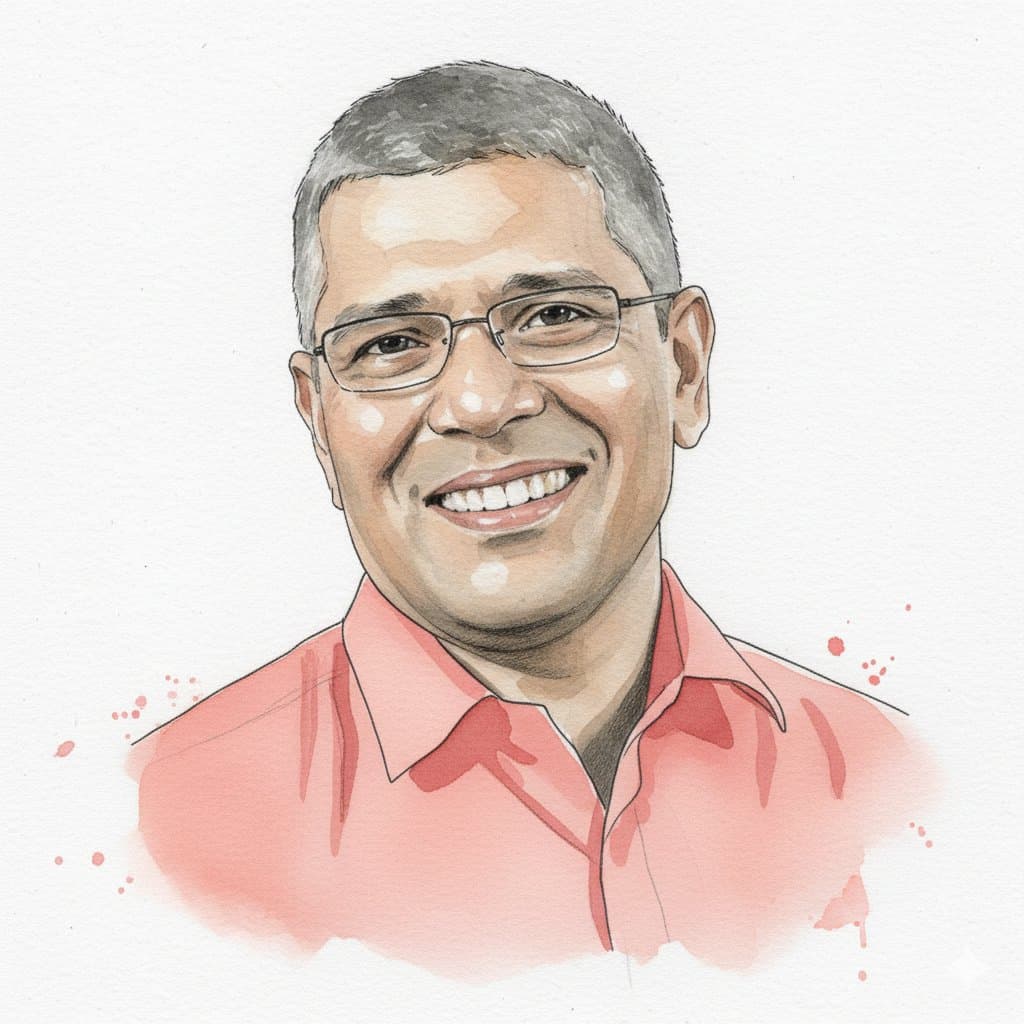
Premraj Menon
Founder, Simpleworks Consulting. 39 years across Telecom, Automotive and Consumer Durables — now helping Indian MSME and family-business founders grow with clarity.