When One OEM Is 60% of Your Revenue: Customer Concentration Risk in Hosur's Auto Component Belt
Customer concentration risk damages an auto component business long before the anchor OEM leaves, by removing its ability to price independently. For founders in the Hosur-Krishnagiri belt, the real exposure is measured in months of survival, not percentage of revenue.
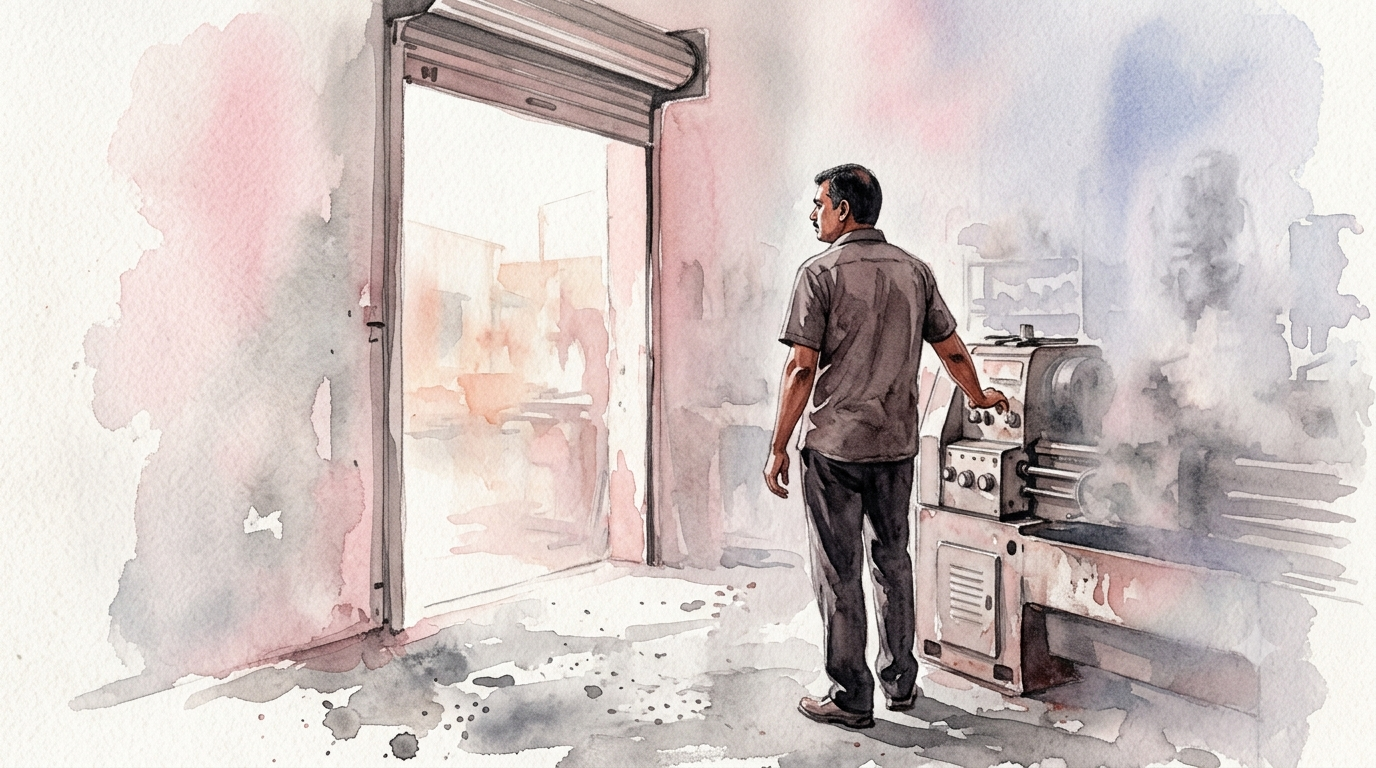
You walk into the annual price discussion with a file. Raw material is up. Power tariffs are up. Your costing sheet says you need six percent. Ninety minutes later you have agreed to give three percent back, and you are already doing the arithmetic on which capex you can defer to absorb it.
Nothing unusual happened in that room. This is what customer concentration risk looks like from the inside, and it is why the standard advice about it misses the point. Founders are told that depending on one OEM is dangerous because that customer might leave. The real damage arrives long before anyone leaves. Once a single buyer crosses roughly half your revenue, you stop being a supplier who prices and start being a captive cost centre whose margins are set by somebody else's procurement calendar.
What customer concentration risk actually costs you before the customer leaves
The term is simple enough. Customer concentration risk is the share of your revenue that depends on a small number of buyers. Most founders track it as one number: what percentage of turnover comes from the largest customer.
That number understates the problem, because it describes a symmetrical relationship that is not symmetrical at all. Your anchor OEM has forty approved suppliers on their vendor list. You have one anchor. If they walk, you lose sixty percent of your revenue. If you walk, they lose a line item and someone in purchase spends a fortnight qualifying a replacement. Both parties know this arithmetic, and it sits in the room during every negotiation whether or not anyone says it aloud.
The consequence is that you cannot price independently. A plant built to one customer's volumes has fixed costs that only that customer's volumes absorb. Machine hours, tooling maintenance, the quality team, the shifts you run - all of it is sized to their schedule. So when they ask for three percent, refusing costs you more than agreeing does. You take the cut, and you take it again next year, and each round makes the next refusal harder because your reserves are thinner.
There is a second cost that surfaces only when you want to exit or raise money. Lenders and acquirers apply a discount to concentrated revenue, because they are buying a cash flow that one procurement decision can halve. A business doing Rs 60 crore with one customer at sixty percent and a business doing Rs 60 crore across eight customers are not worth the same money. Many founders discover this at the valuation stage, fifteen years into building the company, when it is too late to do much about it quickly.
Why the Hosur-Krishnagiri belt concentrates faster than other Tamil Nadu clusters
Every industrial cluster has a characteristic failure mode. In Coimbatore's engineering firms it tends to be range proliferation: a product list that grew by saying yes and now hides which lines actually make money. In the Hosur-Krishnagiri corridor, the failure mode is concentration, and geography is the reason.
Hosur sits on the Bengaluru-Chennai corridor, an hour from a metro and inside the gravitational field of large anchor plants. Ashok Leyland has operated here for decades; the SIPCOT estates around the town were built precisely to cluster suppliers near assembly. That is excellent industrial policy and it has created real wealth. It also means that for a founder starting a precision engineering unit in this belt, the path of least resistance to Rs 40 crore runs through one customer who is already large, already nearby, and already growing. You do not choose concentration. You accept a series of individually sensible orders and arrive at it.
Then the capex trap closes. Serving an OEM well means dedicated tooling cut to their drawings, fixtures built for their tolerances, and often a line laid out for their part family. The asset that proves your commitment is the same asset that makes you hard to redeploy. A press that runs one customer's component is not a general-purpose press with a scheduling problem; it is a specialised machine looking for a buyer who does not exist. So the more competent you become at serving the anchor, the deeper the dependence goes.
The pull is intensifying rather than easing. New industrial park capacity has been announced across the Hosur-Krishnagiri area, which will bring more anchor demand into the belt. That is good news for order books. It is not, by itself, good news for pricing power. Working through this properly is the kind of problem I spend most of my time on with founders across Tamil Nadu's manufacturing clusters, and it is almost never solved by chasing another customer in the same segment.
The three routes out of OEM dependency, and what each one really costs
Diversification gets discussed as though it were a menu. It is closer to a ladder, and the rungs are not equally useful.
Adjacent OEMs: fastest, cheapest, weakest
Sell the same part family to a second and third OEM in the same segment. This is the route almost everyone takes first, because it uses the capability you already have and the relationships you already know how to build.
It reduces the failure risk. It does very little for the pricing problem. Your three customers buy on the same commercial logic, run on the same annual cost-reduction expectations, and go quiet in the same downturn quarter. You have diversified the customer without diversifying the risk. Worth doing, but do not mistake it for a fix.
Aftermarket - a genuinely different demand cycle
The replacement market prices on a different basis, because the buyer is a distributor or a workshop rather than a procurement team with a cost-down target. Margins are structurally better and the demand cycle does not track new-vehicle production.
The catch is that it demands muscle most tier-two suppliers have never built: distribution, packaging, brand, credit management for a fragmented buyer base, and a sales function that does something other than manage one key account. It is also smaller than founders expect. ACMA's FY25 figures put the aftermarket at Rs 99,948 crore against Rs 5.70 lakh crore of supply to OEMs. That is the ratio to plan around: a segment that will not replace your anchor, but will price your capacity differently at the margin.
Exports and moving up the assembly - slow, hard, structural
The only route that changes what you are is climbing from component to sub-assembly, or taking your part to a customer outside India. Both raise the switching cost for your buyer, because they are no longer purchasing a machined part they can re-source in a fortnight. They are purchasing integration work, validation history, and a quality system.
The door is open. Indian auto component exports reached USD 22.9 billion in FY25, growing eight percent, with the industry running a small trade surplus. The bar, though, is real: certification, sustained audit readiness, working capital across longer payment cycles, and an engineering team that can hold a conversation about design rather than only about drawings.
Sequencing across four quarters
Take these in order of what they buy you. Quarters one and two buy capability, not revenue: build the costing visibility to know your true margin by customer, and hire or promote one person whose entire job is a customer who is not the anchor. Quarter three buys the first non-anchor revenue, most realistically from adjacent OEMs or an aftermarket pilot. Quarter four buys optionality, the export or sub-assembly bet that will not pay inside twelve months but changes the shape of year three. Founders who invert this order, chasing revenue before capability, usually end up with a second customer served badly by a team that had no slack.
How to know if you are actually exposed
Revenue share is the number everyone quotes and the least useful one. Four questions give you a truer picture.
| Test | What to look at | Warning sign |
|---|---|---|
| Revenue share | Top customer as a share of turnover | Above 40% |
| Margin share | Share of gross margin from that customer | Higher than the revenue share |
| Asset specificity | Tooling and lines usable only for that customer | Above a third of plant value |
| Relationship ownership | Who they call when there is a problem | Only the founder |
The margin test is the one that surprises people. If your anchor is sixty percent of revenue but seventy-five percent of gross margin, you have been quietly subsidising your other customers to feel diversified, and your exposure is worse than the headline suggests.
The last test is not about customers at all. If the anchor relationship lives entirely with the founder, then concentration is not only a commercial risk; it is a succession risk and a delegation problem wearing a commercial costume.
The case for concentration, honestly stated
The strongest objection to everything above is that concentration built these businesses, and it built them deliberately.
Toyota's supplier system is the canonical example. Depth with one customer bought suppliers co-development access, engineering support, volume certainty, and the confidence to invest in capability that no diversified job shop could justify. Every serious tier-one in the Hosur belt got there by going deep, not wide. A founder who diversified at Rs 15 crore in the name of prudence would have starved the plant of the volume that paid for the machines, and would have three mediocre relationships instead of one strong one. Depth is how you earn a seat at the table. Spreading yourself early is how you stay a job shop.
I think this is right, and it holds under two conditions. The customer must be growing, so their volume growth substitutes for your customer growth. And you must hold capability they cannot cheaply replace, so the depth is a moat rather than a habit.
The trouble is that both conditions expire quietly. Volume plateaus one flat year at a time. Capability commoditises when three competitors buy the same machine. Neither event announces itself. The signal usually arrives disguised as that annual price negotiation, and by the time a founder reads it correctly, the reserves that would have funded a diversification push have already been spent absorbing cost-downs.
So the argument is not that concentration was a mistake. It is that concentration has a term, and most founders do not know when theirs expired.
The number that matters more than the percentage
Stop measuring your dependence in revenue share. Measure it in months.
If your anchor OEM cut volumes forty percent starting next quarter, not cancelled, just reduced, the way real procurement decisions actually arrive, how many months would you run before you were structurally unprofitable? Not uncomfortable. Unprofitable, at a level where the bank conversation changes.
For most firms in this belt the honest answer is somewhere between four and nine months, and almost nobody has calculated it. That number is your real exposure, because it tells you how much time you would have to fix a problem you should have started fixing today. It also tells you something the revenue percentage cannot: whether your next twelve months should be spent building capability or building capacity.
The founders who come out of this well are not the ones who diversified fastest. They are the ones who knew their number, and started while the anchor was still growing and there was still room to invest. If the strategy is clear and the execution keeps slipping to next quarter, that gap is usually the actual problem, and it is the one worth working on first.
About Prem Menon
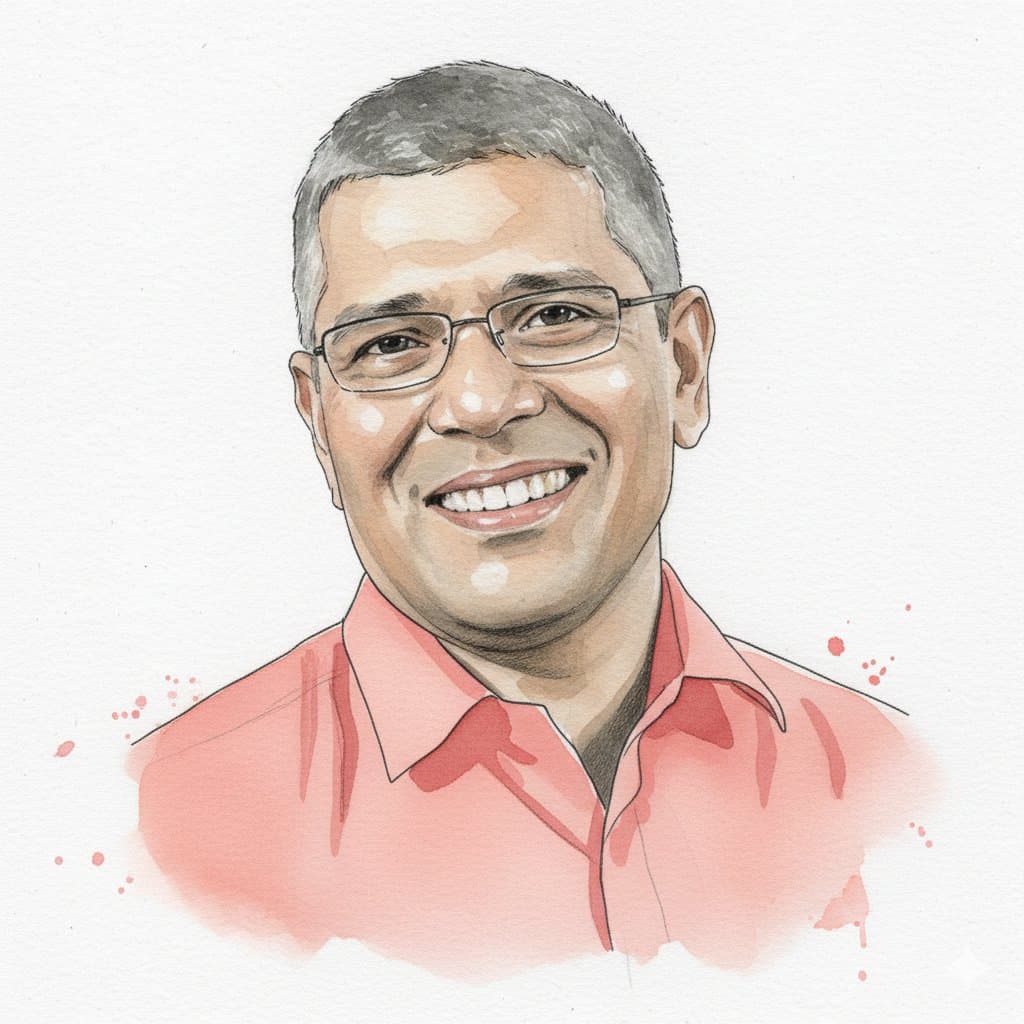
Prem Menon is the founder of Simpleworks Consulting, working with MSME founders and growth-stage businesses across India to turn strategy into execution. With experience spanning manufacturing, SaaS, retail, and professional services, Prem brings a practitioner's eye to the problems most consultants only theorise about.
Want to know how exposed your business actually is?
Premraj Menon
Founder, Simpleworks Consulting. 39 years across Telecom, Automotive and Consumer Durables — now helping Indian MSME and family-business founders grow with clarity.